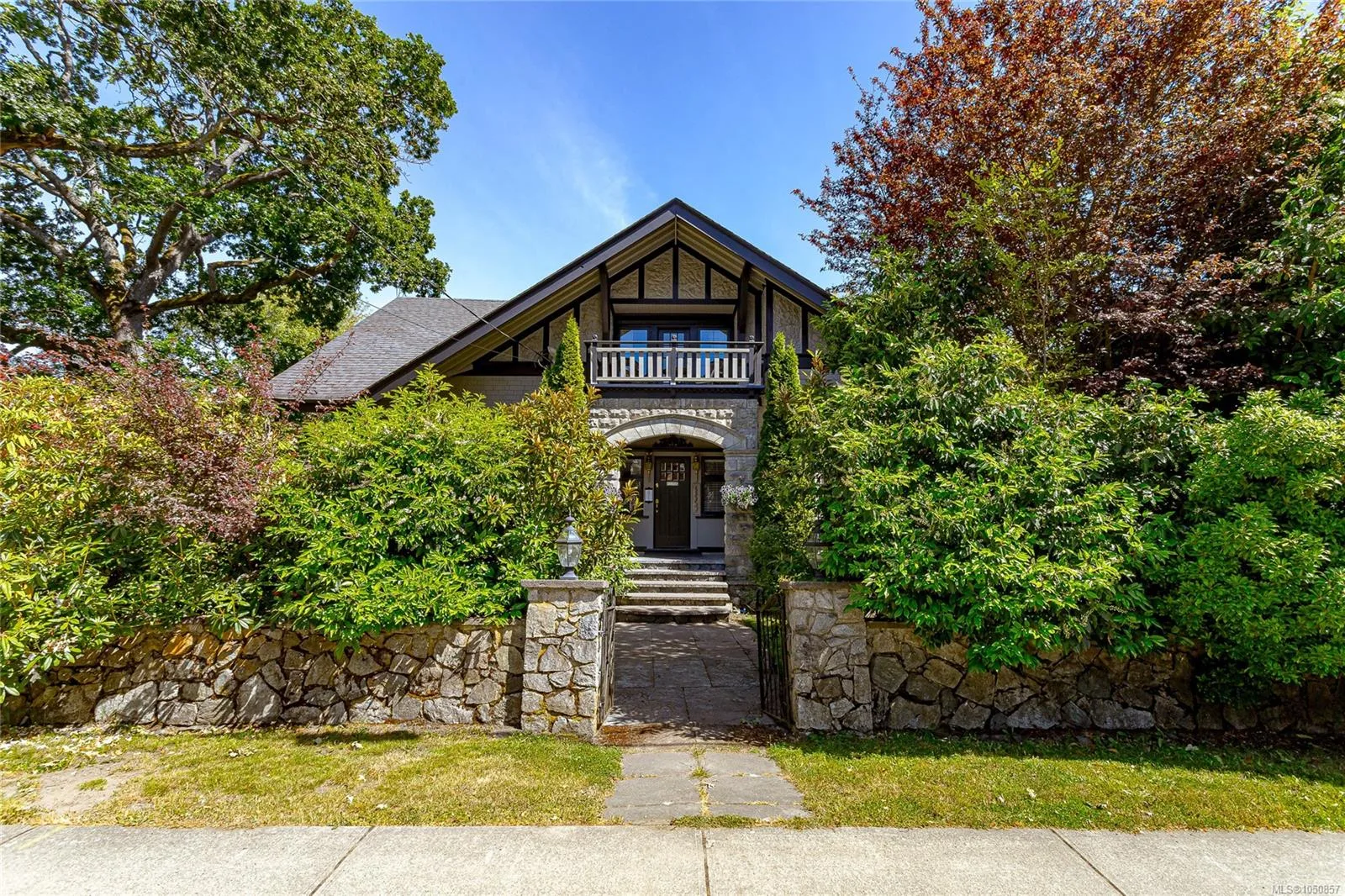
David Beswick works with buyers and sellers in Greater Victoria. Read about offers, due diligence, investment property and development sites under British Columbia rules.
REALTOR®
David Beswick
David works with buyers and sellers and has experience as a REALTOR® and property investor. He has lived in Victoria for most of his life.
He attended St. Michaels University School, the University of Victoria and the University of British Columbia. His experience also includes multi-family development sites.
Brokerage
Macdonald Realty, 755 Humboldt St., Victoria, BC V8W 1B1
BC licence number
165935, read from the regulator's record on November 15, 2026
Phone
250-216-7143 (listed on David’s Macdonald Realty profile)
David Beswick, REALTOR with Kingsbury Real Estate Team in Victoria, British Columbia: who David is, and how offers, negotiation, due diligence, investment property and development sites work under British Columbia rules.
Updated
Kingsbury Real Estate Team wrote this page as general information for British Columbia. Use it to prepare your questions. A lawyer or notary answers legal questions about your purchase or sale, an accountant answers tax questions, and your lender answers mortgage questions.
Who David Beswick is
David Beswick is a REALTOR with Kingsbury Real Estate Team at Macdonald Realty in Victoria. David works with buyers and sellers. The team’s records say David has experience as a REALTOR and a property investor, and also experience with multi-family development sites.
David’s Macdonald Realty profile says David has worked as a REALTOR and investor for more than 10 years and has lived in Victoria most of life. The profile says David attended St. Michaels University School and the University of Victoria, and later the University of British Columbia for real estate. It says David is personally involved in property ownership and property investment. The profile lists these areas of expertise: market analysis, negotiation, conflict resolution, property marketing, social media marketing and property due diligence. These statements are David’s own, and this page gives them as David’s own description.
The direct phone number on David’s Macdonald Realty profile is 250-216-7143. The team’s main number is 250-885-1252. The office address is 755 Humboldt Street, Victoria, British Columbia V8W 1B1.
We read the public record of the BC Financial Services Authority for David John Beswick, licence number 165935, on November 15, 2026. The record shows the status Licensed and the licence type Representative. It lists trading, which covers helping clients buy and sell. It names Macdonald Realty as the brokerage and Kingsbury Real Estate Team as the team. For the periods the regulator reports, licence conditions and discipline both show none.
The licence number is on the team page and opens the regulator’s record. Records change, so read it again before you sign an agreement.
David’s profile says David recently trained to become a Certified Negotiation Expert and lists negotiation and conflict resolution among David’s areas of expertise. This site gives that as David’s own statement and has not checked it with the body that issues the credential. Whatever the training, the rules of an offer come from British Columbia law and from the contract.
A contract of purchase and sale becomes legally binding when the seller signs it, and both sides must then do what it says. The seller’s licensee must tell the seller about every offer. A seller is never required to accept an offer, even at the full asking price. The regulator explains that the highest price does not always win, because the conditions, the completion date or the financing can matter more to a seller.
Some tactics are riskier than they look. The regulator warns about an offer that is defined by reference to competing offers, called a referential offer, because the British Columbia Court of Appeal held such an offer invalid and unacceptable. It also says that a seller may tell the agent to share information from one offer with another buyer, and that a clause forbidding this does not bind a seller who has not yet accepted and signed the offer.
In a market with many buyers, offers may arrive with no conditions. A buyer whose offer without conditions is accepted must complete the purchase or risk a lawsuit. The regulator advises sellers to seek legal advice before they accept such an offer, for example when the buyer has not secured financing or has not inspected the home. Buyers should know that only when every condition has been removed is the buyer bound to buy.
Deposits are part of negotiation too. The deposit is usually held in the brokerage trust account as a neutral party. If conditions are not removed, the deposit does not return to the buyer automatically. Both sides sign a release, except when the buyer uses the Home Buyer Rescission Period. If either side will not sign, the brokerage cannot release the deposit and may pay it into the BC Supreme Court for a judge to decide.
Property due diligence means checking facts about a property before you are bound to buy it. David’s profile lists it as an area of expertise. This section describes the records any buyer can check, with or without an agent.
Start with the title. The Land Title and Survey Authority explains that a title and its registered charges can include easements, covenants and statutory rights of way. A charge is an interest in land that is registered on the title, such as a mortgage, an easement or a covenant. A map of the parcel does not by itself explain the legal effect of those charges. A parcel identifier, called a PID, is a nine-digit number that identifies one parcel. A PID names one parcel exactly, so use it when you ask for records.
Then check the local rules. Zoning controls what use is allowed and how large a building may be. The regulator’s buyer checklist lists zoning, restrictive covenants, easements, the property taxes, the age and condition of the roof, permits for renovations, the wiring and the heating system. For a strata unit, the regulator advises reading at least two years of strata meeting minutes. Buyers can ask a seller to allow an inspection or to provide the strata documents before offers are written.
The seller’s statements are a starting point for your own checks. The property disclosure statement is a voluntary form in British Columbia, and there is no required form. A seller who gives a Property No Disclosure Statement leaves open questions, and the regulator advises buyers to treat that as a reason for more due diligence and to ask the lender whether it is enough for financing. A seller must disclose a known latent defect, which a reasonable inspection cannot find, before the contract is signed.
A home inspection is the standard step. Consumer Protection BC says home inspectors in the province must be licensed, meet education and training requirements, carry insurance and complete a criminal record check. An inspection is visual, and inspectors are not experts in every field. The inspector must give a written contract and a written report that lists areas that need expert advice and areas that were not covered. An inspector should not give repair estimates or refer you to a contractor.
Some risks need a specialist. Health Canada advises corrective action when the average annual radon level in the normal living area is more than 200 becquerels per cubic metre, which is the unit used to measure radon. A long-term test lasts at least 91 days, and tests of 3 to 12 months are suggested, with at least 91 days in the heating season. If a level is higher than 200, the advice is to reduce it within one year with help from a certified radon mitigation professional.
WorkSafeBC says a home built before 1990 is likely to contain asbestos in some parts. Materials that often contained it include drywall, textured ceiling coat, insulation, vinyl flooring and window putty. Before a renovation or demolition, the advice is to test, to hire a licensed asbestos surveyor and to use a licensed abatement contractor.
Saanich has rules for old oil tanks. An underground tank that has not been used or has been out of service for more than two years must be removed. The work needs a Fire Department permit and a soil test by a certified environmental engineer, and the Fire Department inspects within 14 days. Insurers and lenders may require an inactive tank to be removed before they approve insurance or a mortgage. Ask the seller for the tank records of any older home.
Market analysis is another area of expertise on David’s profile. Two numbers get confused. The first is the assessed value on the BC Assessment notice. BC Assessment says the notice reflects market value on July 1 of the previous year, that the roll reflects the physical condition and permitted use of the property on October 31, and that notices are mailed on December 31. The assessment is the base for property taxes and serves as a tax valuation reference. A sale price comes from what a buyer and a seller agree on.
The second number is the price that a buyer and a seller agree on today. The regulator advises you to compare similar properties and recent sales when you consider an asking price. BC Assessment defines market value as the most probable price in an open market between a willing buyer and a willing seller.
If you think your assessment is wrong, the first level of appeal is a Property Assessment Review Panel. A notice of complaint must be filed with BC Assessment by January 31. A complaint filed directly with a panel or its office is not valid.
David’s profile says David is personally involved in property ownership and property investment. The team’s records say David has experience as a property investor. Every investor has to check the same public rules, and an accountant and a lawyer answer the questions that are particular to you.
Check the strata bylaws first for a condominium. The Province says a strata corporation may not ban long-term rentals, and it may restrict or ban short-term rentals. The strata documents also show the budget, the reserve fund and any special levy, which affect the monthly cost of owning the unit. A strata can approve a special levy to cover a shortfall.
Check the holding period. The BC home flipping tax applies to profit from the sale of British Columbia residential property owned for less than 730 days, including presale contracts. The rate is 20 percent of net taxable income for a sale within 365 days, and it falls over the next 365 days. A return is due within 90 days of the sale. The Province lists exemptions, and some need a return to claim them.
Check the landlord rules before you rent a home out. The Residential Tenancy Branch says a landlord can charge a security deposit of up to half of one month’s rent and cannot keep it without the tenant’s written permission or an order from the branch. Read the full set of tenancy pages first.
Finally, check the tax on the purchase. The property transfer tax uses the general rates of 1 percent on the first 200,000 dollars, 2 percent up to 2 million dollars and 3 percent above that, with a further 2 percent on the residential value above 3 million dollars, and additional tax can apply. The Province offers an online calculator.
The team’s records say David has experience with multi-family development sites. A buyer who thinks about a site needs proof from the municipality that covers it. Treat any development idea as a question to confirm, until the municipality shows what the site allows.
Start with the zoning. The City of Victoria says its zoning bylaws divide the city into land uses and control the building type and size, the lot size, landscaping and parking, and that more than one zoning bylaw applies in different areas. The city’s online map shows the zone of a parcel. The Township of Esquimalt says rezoning, an official community plan amendment, a development permit, a variance, a subdivision and a building permit have separate application routes.
Then read the plan. Saanich says its Official Community Plan is the main guidance among its community plans, that local area plans do not form part of the plan bylaw, and that development permit areas regulate design, site design and protection of the natural environment. The City of Victoria adopted its Victoria 2050 plan in 2025, and the plan is read alongside the zoning.
Small-scale multi-unit rules changed in the last few years. The Province required local governments to allow between 3 and 6 housing units on lots in single-detached zones, depending on lot size and location. Saanich allows 3 to 6 units without rezoning on residential lots inside its Urban Containment Boundary, and a proposal for 5 or more units needs a Form and Character Development Permit. Oak Bay permits infill housing of up to 4 units on lots larger than 280 square metres.
Titles matter on a site, because easements, covenants and rights of way can limit what may be built. Heritage rules apply in some areas, such as the Prospect Heritage Conservation Area in Oak Bay. Our development sites page lists what to bring to a first conversation.
David’s profile lists property marketing and social media marketing as areas of expertise. Before you sign any listing agreement, the regulator advises you to interview several professionals and to understand each proposed marketing strategy.
A listing agreement is a legally binding contract with the brokerage. It sets the price, the start date and the end date, the commission, the share for a buyer’s agent and what happens if either side ends it early. An exclusive listing gives the brokerage the sole right to sell. A multiple listing places the home on the multiple listing service and shares part of the commission with another member who brings a buyer. The regulator does not set commissions, and many terms can be negotiated.
Accurate facts help a sale. The seller is responsible for facts such as the age of the home, the financing, the condition of the roof and the water heater, and the property taxes. For a strata home, gather the minutes of the last two years, the financial statements, the bylaws, any engineer’s report and the Form B. A seller can ask the licensee for an estimate of the money received after costs.
Because David lists conflict resolution as an area of expertise, here is how the regulator describes a dispute with a licensee. Raise a concern first with the licensee, then with the managing broker of the brokerage, and then with a practice standards advisor at the BC Financial Services Authority. The regulator can investigate and discipline licensees. It cannot make a licensee perform a contract, it has no authority over sellers who do not perform, and it cannot award damages.
The rules on agency apply when interests collide. Most brokerages use designated agency, and a team acts as your agent as a whole. If a conflict of interest between clients cannot be managed, the licensee may end the relationship with one or all parties, and continuing for one party needs everyone’s consent.
Call 250-216-7143, which is the number on David’s Macdonald Realty profile, or call the team’s main number at 250-885-1252. You can also send a message from the contact page.
Say whether you want to buy, to sell or to invest, and give the address or the area. For a development site, say what you have already checked, and ask what proof you need from the municipality.
The address or the area you are interested in
Whether you plan to live in the property or to rent it out
The title search or zoning notes you already have
Your lender’s preapproval, if you have one
The dates you must meet
Your questions about offers, deposits and conditions
David Beswick is a REALTOR with Kingsbury Real Estate Team at Macdonald Realty in Victoria, British Columbia. The team’s records say David has experience as a REALTOR and a property investor, and with multi-family development sites. The Macdonald Realty profile says David has lived in Victoria most of life and attended St. Michaels University School, the University of Victoria and the University of British Columbia.
Yes. The BC Financial Services Authority lists David John Beswick under licence number 165935 with the status Licensed and the licence type Representative. The record covers trading and names Macdonald Realty and Kingsbury Real Estate Team. For the periods the regulator reports, conditions and discipline both show none. We read the record on November 15, 2026.
What does David Beswick’s profile say about negotiation training?
The profile says David recently trained to become a Certified Negotiation Expert. This site repeats that as David’s own statement and has not checked the credential with the body that issues it. The rules of an offer come from the contract and from British Columbia law, and the regulator’s pages explain them.
No. The BC Financial Services Authority says the highest offer does not always win, because the conditions, the completion date or the financing can matter more to a seller. A seller is never required to accept an offer, even at the full asking price. A seller may tell the agent to share information from one offer with another buyer, and a clause that forbids this does not bind a seller who has not accepted and signed the offer.
What is an offer with no conditions, and why is it risky for a buyer?
It is an offer that does not depend on financing, an inspection or any other step. The BC Financial Services Authority says a buyer whose offer without conditions is accepted must complete the purchase or risk a lawsuit. Risks include defects found after the purchase and a preapproval that proves not to be a final approval, which could cost the deposit.
A title shows the owner and the charges registered against a property. The Land Title and Survey Authority says charges can include a mortgage, an easement, a covenant or a statutory right of way, and a parcel map alone does not explain their legal effect. A parcel identifier, or PID, is a nine-digit number that identifies one parcel.
Is a home inspection enough to find every problem?
No. Consumer Protection BC says a home inspection is visual and that inspectors are not experts in every field. The inspector must give a written report that lists areas needing expert advice and areas not covered. The regulator advises buyers to ask a qualified specialist when there is evidence of a problem or of work done without a permit.
Test before you remove your conditions if you can, or soon after you move in. Health Canada says a long-term test lasts at least 91 days, and tests of 3 to 12 months are suggested, with at least 91 days in the heating season. Corrective action is advised when the average annual level in the living area is more than 200 becquerels per cubic metre, which is the unit used to measure radon.
It may. WorkSafeBC says that a home built before 1990 is likely to have asbestos in some parts, such as drywall, textured ceiling coat, insulation, vinyl flooring and window putty. Before a renovation or demolition, test, hire a licensed asbestos surveyor and use a licensed abatement contractor.
Is the BC Assessment value the price my home will sell for?
No. BC Assessment says the notice reflects market value on July 1 of the previous year and is a tax valuation reference. A sale price comes from what a buyer and a seller agree on. The regulator advises comparing similar properties and recent sales. A complaint about your assessment must be filed with BC Assessment by January 31.
A strata cannot ban long-term rentals, according to the Province of British Columbia. It may restrict or ban short-term rentals. Because bylaws can change, the regulator lists a change to rules about rentals, parking or storage as a risk of an offer without conditions. Read the current bylaws and minutes before you buy.
Does David Beswick find development sites for buyers?
The team’s records say David has experience with multi-family development sites. A buyer should see proof from the municipality of what a site allows. Check the zoning, the official community plan, the title and the application routes for rezoning and permits before you rely on any site.
How many housing units can Saanich allow on a single-family lot?
Saanich allows between 3 and 6 units without rezoning on residential lots inside its Urban Containment Boundary. A proposal for 5 or more units needs a Form and Character Development Permit. The amendments took effect on June 30, 2024. Properties outside the boundary are allowed one secondary suite. Check the lot with Saanich before you rely on these numbers.
Raise the concern first with the licensee, then with the brokerage’s managing broker, and then with a practice standards advisor at the BC Financial Services Authority. The regulator can investigate and discipline licensees. It cannot make a licensee perform a contract or award damages, so a legal adviser handles a claim for money.
Call 250-216-7143, the number on David’s Macdonald Realty profile, or call the team’s main number at 250-885-1252. You can also send a message from the contact page. Say whether you want to buy, sell or invest, give the address or the area, and say which dates you must meet. David’s page lists what to bring to a first conversation.
 Real Estate TeamLet's talk